Why Venice and opera belong together
Opera in Venice since 1637
How Venice opened the world's first public opera house in 1637, how Monteverdi and La Fenice followed, and where a small concert in the Prisons Palace fits.
Reserve seats for the concert ↗Quick answer
Opera began in Florence around 1600, but Venice made it public: the Teatro San Cassiano opened in 1637 as the world's first public opera house, selling tickets to a paying audience. Monteverdi wrote his last operas for Venetian theatres, and La Fenice opened in 1792. A small concert in the Prisons Palace belongs to the same tradition at a much smaller scale.
Before Venice: a court art
Opera began in Italy at the end of the 16th century, when a circle of Florentine humanists wrote music for drama in imitation of the ancient Greeks. Jacopo Peri's Dafne, produced in Florence in 1598, is the earliest work usually counted as opera. It was a private spectacle for the aristocracy and the courts. Nobody could buy a seat. That is the background to the Venetian change: a city of merchants with a carnival season, a theatre trade and an audience willing to pay.
1637: the first public opera house
The Teatro San Cassiano, in the parish of San Cassiano near the Rialto, was inaugurated in 1637 as the world's first public opera house. It was owned by the Tron family and was the first theatre to stage opera for a paying audience. Until then, public theatres had put on spoken plays, while opera stayed private. The idea of a season of publicly attended operas, often during carnival and supported by ticket sales, emerged in Venice that year. A modern project aims to rebuild the theatre as faithfully as research allows.
Monteverdi comes to Venice
Claudio Monteverdi had moved to Venice from Mantua, and he composed his last operas for Venetian theatres in the 1640s: Il ritorno d'Ulisse in patria and L'incoronazione di Poppea. His most important follower, Francesco Cavalli, helped spread opera across Italy from the same city. These early baroque operas blended broad comedy with tragic elements, a mix that jarred some educated critics and sparked the first of opera's many reform movements.
Boxes and the Italian theatre
The San Cassiano theatre is also tied to a design that shaped opera houses everywhere. Evidence from 1581 shows theatre boxes were already present in its first incarnation, years before it staged opera. The boxes became one of the key elements of the Italian opera house, with tiers of private rooms around a stage. That matters when you compare a modern opera house with a small hall: the opera house sells the grand setting, while a concert room sells closeness.
La Fenice, 1792
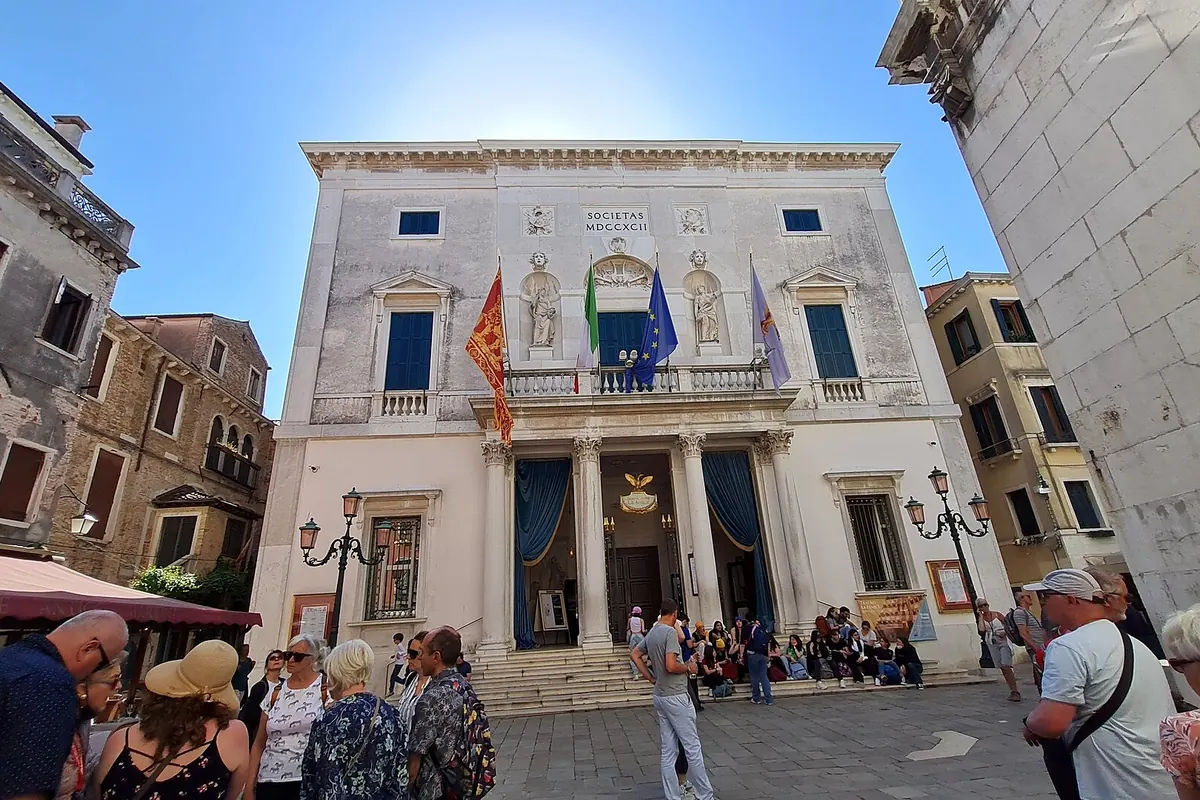
La Fenice opened on 16 May 1792 with I Giuochi d'Agrigento, designed by Giannantonio Selva. A fire destroyed the theatre on 13 December 1836, and it reopened on 26 December 1837. A second fire on 29 January 1996 destroyed it again, and it was rebuilt to the motto "the way it was, where it was" and handed back on 8 December 2003. The theatre's own history says it has risen twice from its ashes and water, which is where its name, the phoenix, earns its keep.
Carnival and the opera season
From the start, Venetian opera was tied to carnival. The season of publicly attended operas that emerged in 1637 often ran during carnival, and the Carnival of Venice is still held every year, lasting around two weeks and ending on Shrove Tuesday, with masks worn in the streets. That link between festival, theatre and tickets helps explain why Venice treated opera as entertainment for a paying public rather than a court ritual. It also explains why a visitor can still buy a seat for an hour of arias without any special occasion.
Where a small concert fits
The concert in the Prisons Palace is not an opera house season. It is about an hour of arias with a pianist, in a hall in a building of the old Venetian Republic. It will not give you a staged production, but it keeps the thing that made Venetian opera popular: a paying audience in a room with performers close enough to see. For many visitors that is the more practical way to hear opera in a short stay, and a visit to La Fenice's season can be added if dates fit.
Frequently asked questions
Which was the first public opera house?
The Teatro San Cassiano in Venice, inaugurated in 1637, was the world's first public opera house, open to a paying audience.
When did La Fenice open?
On 16 May 1792. It burned in 1836 and again in 1996, and it reopened after the second rebuilding in December 2003.
Did Monteverdi write opera for Venice?
Yes. His last operas, Il ritorno d'Ulisse in patria and L'incoronazione di Poppea, were written for Venetian theatres in the 1640s.
Sources