Casanova, the Piombi and the bridge
Casanova's prison in Venice
Which prison held Casanova, how he escaped in 1756, and how the Bridge of Sighs and the New Prisons fit the picture: a sourced guide to Venice's prisons.
Reserve seats for the concert ↗Quick answer
Casanova was held from 1755 in the Piombi, the attic cells beneath the Doge's Palace's lead roofing, and escaped on 1 November 1756. He was not held in the New Prisons across the canal, which the Bridge of Sighs joins to the palace and which now house the opera concert. The two buildings belong to one system: the New Prisons were built to replace the older cells, and the bridge was the passage between them.
The short answer: the Piombi
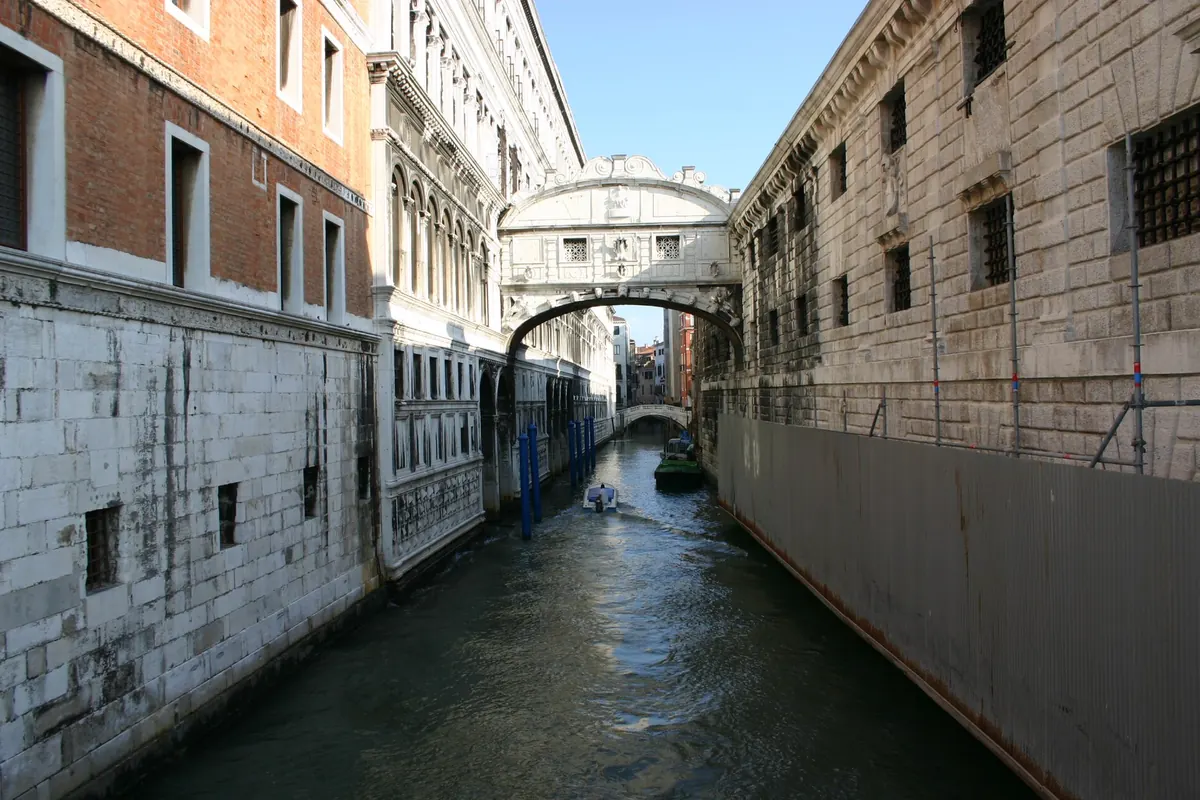
The popular picture of Casanova behind the Bridge of Sighs is slightly off. He was arrested on 26 July 1755 and imprisoned under the Leads, the Piombi, a set of cells in the attic of the Doge's Palace's east wing. The New Prisons, the building the bridge leads to, were a separate and newer prison. The ticket for the opera concert uses Casanova's name because the two prisons share a story, but the room where the concert takes place was not his cell. Keeping the two apart makes the rest of the history easier to follow, and it explains why this guide treats them one after the other.
What the Piombi were
The Piombi take their name from the lead slabs that covered the palace roof, directly above the cells. The slabs let the cold through in winter and conducted the heat in summer, which made the cells harsh. A resolution of the Council of Ten, dated 15 March 1591, shows the cells were planned in the late 16th century, because the older cells were thought too severe. Prisoners could have furniture, bedding and food brought in, and a small allowance, so the Piombi were not the worst place the Republic could put a prisoner. They were reserved for prisoners of higher status and for certain offences, among them political prisoners and libertine priests.
Arrest and sentence
Casanova, then 30, was arrested on 26 July 1755 for affronts to religion and common decency, and imprisoned under the Leads. The tribunal's record states the charge as public outrages against the holy religion. On 12 September he was sentenced, without a trial and without being told the reasons, to five years in prison. He describes the cell as dark and hot and writes that he suffered from fleas. After five months a personal appeal from a patron won him warmer bedding and a monthly allowance for books and better food. The details of the cell come from his own later account.
The escape
Casanova found an iron bar on an exercise walk in the garret, smuggled it into his cell and sharpened it into a spike. Moved to another cell, he passed the spike to Father Balbi, a prisoner next door, who broke through his own ceiling, climbed across and opened Casanova's ceiling too. The two pried through the lead roof plates in heavy fog, found a ladder, lowered themselves into a room with a bedsheet rope and walked out of the palace in the morning. Wikipedia's article on the Piombi dates the escape to 1 November 1756, and the account has Casanova reaching Paris on 5 January 1757.
Afterwards: Venice wanted the story
Casanova reached Paris, and thirty years later, in 1787, he wrote Story of My Flight, which proved popular and was reprinted in many languages. He retold the tale in his memoirs. When he eventually won permission to return to Venice, he was a celebrity at first, and even the State Inquisitors wanted to hear how he had escaped from their prison. The escape was already part of the city's lore, and it still is. That is why a concert hall in the New Prisons carries his name on a ticket, although his own cell was elsewhere. It is a story that survives because he was the one who told it. The memoir's twelve volumes run to more than 3,500 pages in the unabridged English translation.
The Pozzi and the older prisons
The Piombi were not the only prison in the palace. The ground-floor cells, called the Pozzi, meaning the wells, were dark, damp and isolated, and further cells grew through the 13th and 14th centuries. The Piombi were added from 1591 for prisoners of higher status. A service staircase links the Pozzi on the ground floor to the Piombi under the roof, as the museum's page on the prisons describes it. The point of the New Prisons was to move most prisoners out of this crowded warren into a purpose-built building, which is the building you now cross the bridge to reach.
Why the New Prisons were built
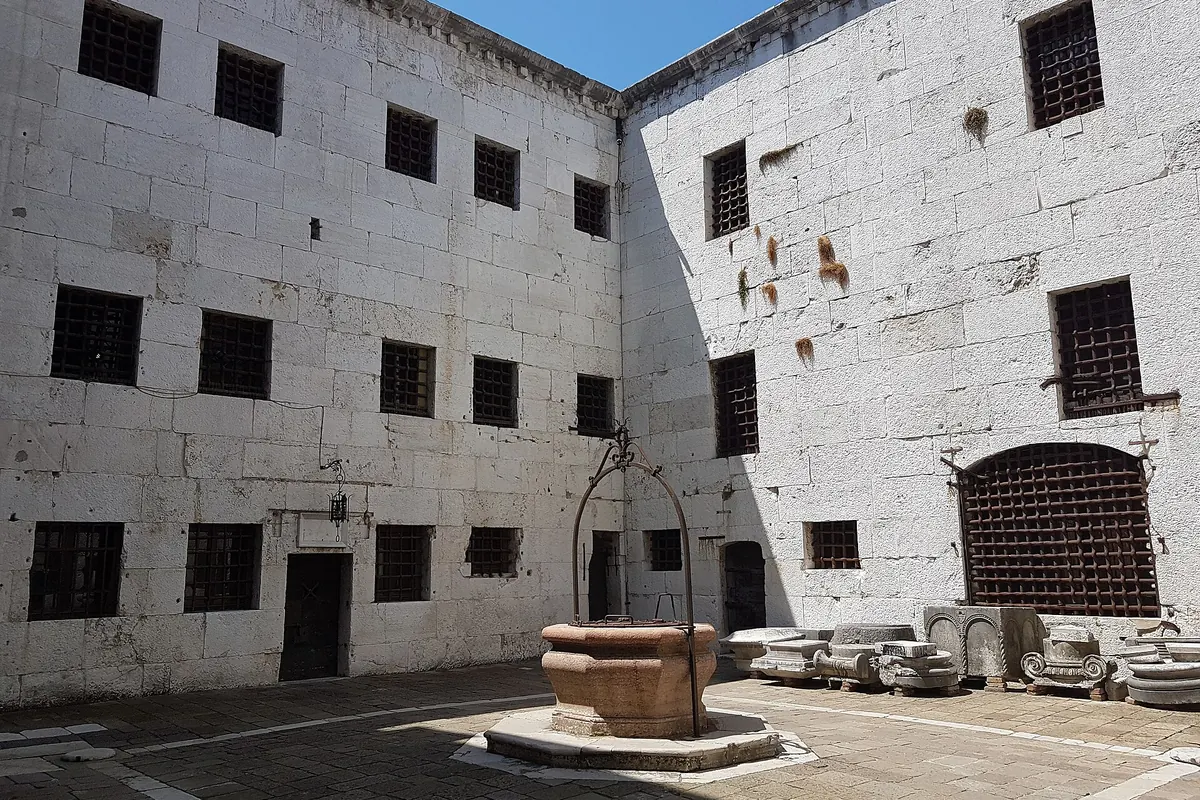
In the mid-16th century the Republic decided to build a new prison across the Rio di Palazzo, to hold prisoners and the chambers of the magistrates known as the Notte al Criminal. The aim was bigger, lighter and airier cells than the palace could offer. The museum says some parts fell short of that aim, especially passages with walls on all sides and cells that faced the inner courtyard. Each cell was lined with overlapping larch planks. The museum adds that the New Prisons were possibly one of Europe's first purpose-built state prisons, which makes the building more important than its plain walls suggest.
The Bridge of Sighs
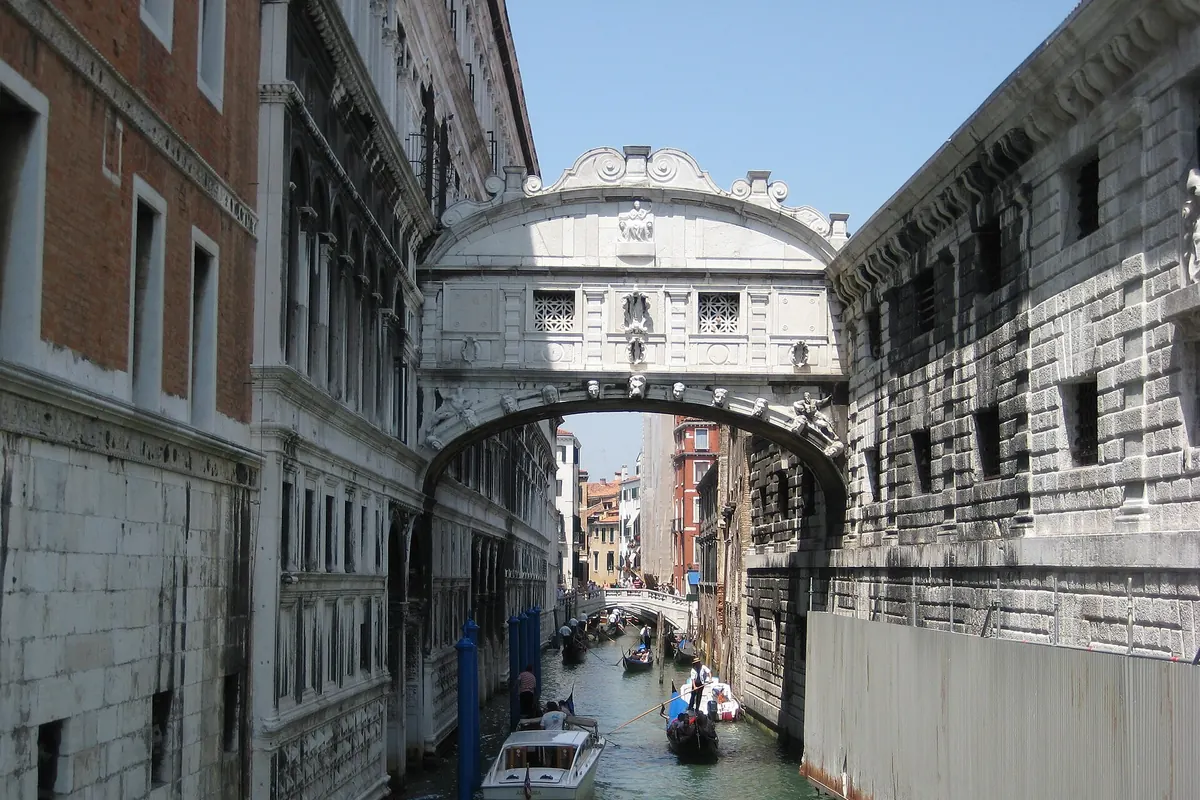
The Bridge of Sighs is enclosed and covered on all sides, built of white Istrian limestone, and holds two separate corridors side by side. The museum dates it to 1614 and Wikipedia to soon after 1600, so early in the 17th century is true under both. It linked the palace's courtrooms to the cells, and the two gangways meant a convicted prisoner did not meet those still awaiting judgment. The name is later. It dates from the Romantic period, and the English form is credited to Lord Byron. The sighs of prisoners glimpsing the lagoon are a 19th-century idea, not a record from the Republic's time. The museum notes that visitors today use the corridor that once led to the chambers of two magistracies.
Casanova and music
Casanova is remembered as a seducer, but he was also a musician. After giving up the law and the church he worked as a violinist at the San Samuele Theatre, a job he described as menial work in a sublime art. That puts him inside the same theatre world that gave Venice its public opera in 1637 and La Fenice in 1792. It makes the concert in the Prisons Palace a natural pairing: an hour of arias in a building tied to a man who earned his living in Venice's theatres before he became a prisoner. The guide to opera in Venice follows that theatre history. He also wrote for the stage: his play La Moluccheide, now lost, was performed at the Royal Theatre in Dresden in the early 1750s.
Read next: Opera in Venice since 1637
Who this isn't for
Nobody should expect certainty on every detail. The sources disagree on how many cells the Piombi held, and on dates for the New Prisons and the bridge. Casanova's own memoir is the main source for the escape, and Wikipedia notes that many details in it are exaggerated, though much of it is corroborated by other writings of his time. This guide gives the facts the sources agree on. It is also not a tour guide: it does not describe what a visitor sees inside the museum, which has its own route and tickets, and it does not promise any particular cell can be seen.
Seeing the place for yourself
The Prisons Palace faces the Riva degli Schiavoni, with a south front that the architect Antonio da Ponte treated as the only elaborate wall of a building otherwise bare of decoration. From the street you can see the barred windows and the bridge in its setting. The opera concert is one way inside, with a pianist and singers in a hall in the same building. The museum's visitor route is another, and it crosses the bridge from the palace itself. Both are separate from the Piombi, which sit in the palace attic. The museum's own account of the prisons says the visit begins with a small descending staircase into one of the bridge's two passageways, and that one cell shows the lidded buckets used for prisoners' waste.
Frequently asked questions
Where was Casanova imprisoned in Venice?
In the Piombi, the attic cells beneath the Doge's Palace's lead roofing. He was arrested on 26 July 1755 and escaped on 1 November 1756.
Is the Bridge of Sighs connected to Casanova?
Only through the wider story. The bridge links the palace to the New Prisons, which were a separate building from the Piombi where Casanova was held.
Why is it called the Bridge of Sighs?
The name dates from the Romantic period of the 19th century. The English form is credited to Lord Byron, and the story of prisoners sighing at the lagoon is a later idea.
When were the New Prisons built?
The Republic decided in the mid-16th century to build them, and the work ran into the early 17th. The sources differ on exact years, so early 17th century is the safe date for the bridge.
Can you hear opera in the New Prisons?
Yes. An opera concert with singers and a pianist is held in the Prisons Palace, the building across the canal from the Doge's Palace.
Sources